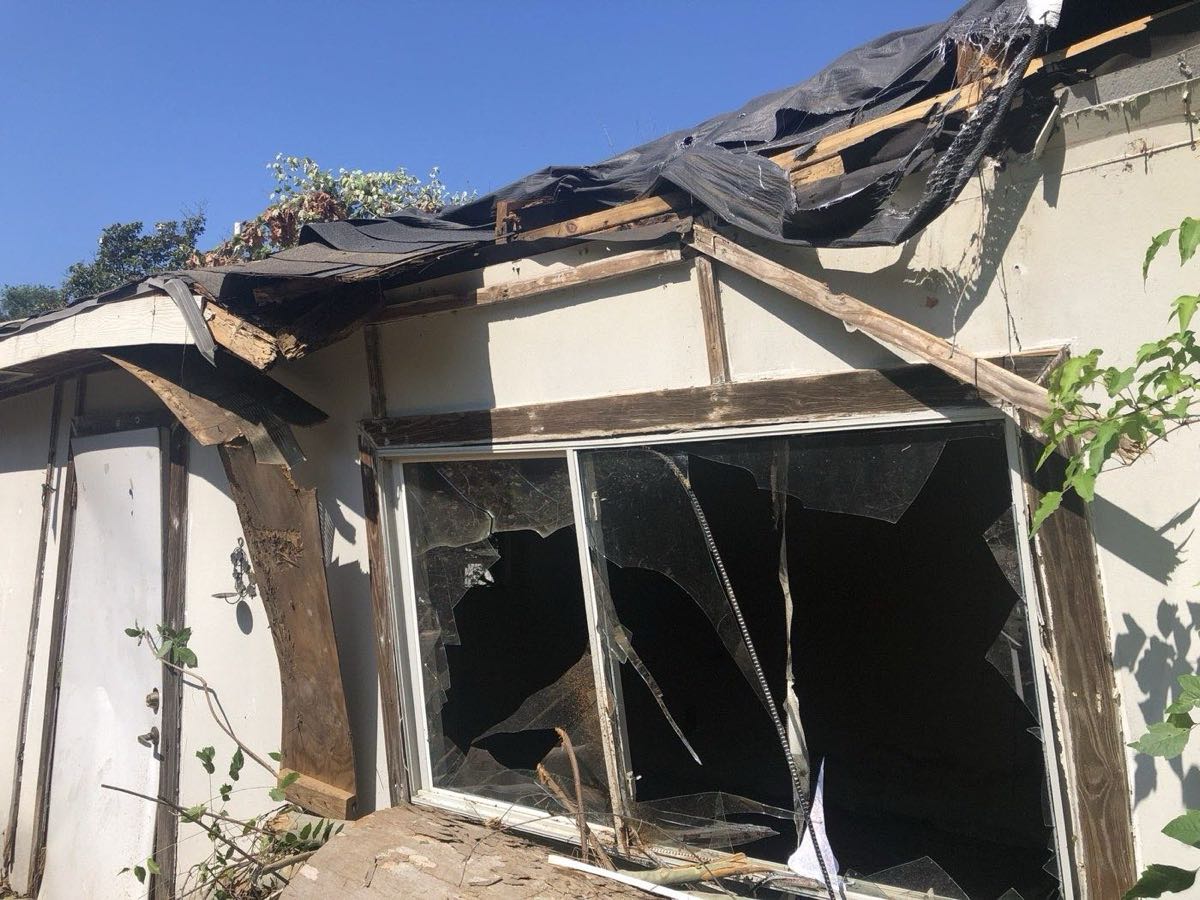
Storm Damage Repair & Insurance Claims
After a hail or wind event, you don't need a salesman on your porch — you need a straight answer. We inspect for free, document everything, and walk your claim through with your insurer. And if the damage doesn't justify a claim, we'll tell you that too.
After a hail or wind event, you don't need a salesman on your porch — you need a straight answer. We inspect for free, document everything, and walk your claim through with your insurer. And if the damage doesn't justify a claim, we'll tell you that too.
On this page
Just Had a Storm? Do These Four Things First
Take a breath. Storm damage almost never needs a same-hour decision — and the people who pressure you into one are the ones to avoid.
-
Stay off the roof
Wet shingles, loose decking, and downed lines cause more injuries after Houston storms than the storms themselves. If water is coming in, put a bucket under it and move valuables — nothing on the roof is worth a fall.
-
Document from the ground
Phone photos of visible damage — missing shingles, dented gutters, hail on the ground, fallen limbs, interior stains — with the date on them. You don't need a ladder; ground-level and window shots are enough to start a record.
-
Don't sign anything at the door
After every major storm, door-knockers sweep Houston neighborhoods with contracts and "assignment of benefits" forms. A legitimate roofer will inspect first, give you a written assessment, and let you take your time. Nothing you sign on day one helps you — it only locks you in.
-
Get an honest inspection before you file
Filing a claim is a decision worth making with facts in hand. A free inspection tells you whether the damage clears your deductible and is worth a claim at all — before your insurer is involved. Not sure whether a slow leak even counts? What Texas policies actually cover.
Hail Damage vs. Wind Damage: What to Look For
Both are typically covered under a standard Texas homeowner's policy, but they look different — and adjusters evaluate them differently.
Signs of hail damage
- Random dark spots or "bruises" on shingles where granules were knocked loose
- Granules collecting in gutters and downspout splash areas
- Dents in metal — gutters, flashing, roof vents, AC fins, mailboxes
- Cracked or chipped areas on soft-metal ridge caps
- Damage spread evenly across one side of the roof (the side the storm hit)
Signs of wind damage
- Missing shingles, or shingles in the yard and flowerbeds
- Creased or lifted shingle tabs that no longer lie flat
- Exposed black underlayment or bare decking
- Loose or peeled flashing at edges, ridges, and penetrations
- Damage concentrated at roof edges, corners, and ridge lines
Hail damage in particular is easy to miss from the ground — a roof can look fine and still have failed. That's exactly what a trained inspection is for.
How a Texas Roof Insurance Claim Actually Works
No mystery, no magic — six steps. The full Texas storm claim guide walks each step in more depth.
-
Free inspection
We walk the roof and the property and give you a straight verdict: real storm damage worth a claim, minor damage better handled as a small repair, or no damage at all. About a third of the storm inspections we do end with "you don't need us yet" — and that costs you nothing.
-
Documentation
If a claim makes sense, we photograph every slope, every impact, every piece of collateral damage — gutters, vents, fencing, screens — and assemble it into a documented damage report. Claims are won or lost on documentation. (Want to start yourself, safely from the ground? Print our storm damage documentation checklist and track everything in the claim worksheet — and for the full process in depth, read the Texas roof insurance claim guide.)
-
You file; we meet the adjuster
You call your insurer to open the claim (that part has to be you — it's your policy). When the insurance adjuster schedules the roof visit, we're there with them, pointing out every item in our report so nothing gets missed or waved off.
-
Scope agreement
The insurer issues a scope of loss — what they'll pay for and how much. We review it line by line against our documentation. If it's short, we submit a supplement with photo evidence. This back-and-forth is normal; it isn't a fight, it's the process.
-
The work
Once the scope is agreed, we schedule your repair or replacement — premium materials, our own standards, one dedicated crew start to finish.
-
Completion & final paperwork
We walk the finished roof with you, send the completion documents your insurer needs to release any remaining (recoverable depreciation) funds, and register your warranty. You pay your deductible; insurance covers the approved balance.
How AttarCo Helps
Forty years on Gulf Coast roofs means we've stood on thousands of them after storms. Here's what that experience buys you.
What we do
- Thorough photo documentation of every damaged item, assembled the way adjusters expect to see it
- Meet your adjuster on the roof so the person deciding your claim sees what we see
- Supplement underpaid scopes with evidence, not arguments
- Emergency tarping to stop active leaks while the claim is processed — temporary protection is typically a covered expense
- Tell you the truth: if the damage doesn't justify a claim, we say so and tell you what a straight repair costs instead
Straight Talk About Your Deductible (Texas HB 2102)
Under Texas law, you are required to actually pay your policy deductible on an insurance-funded roof. In 2019, Texas passed House Bill 2102, which makes it a criminal offense for a contractor to waive, absorb, rebate, or otherwise "handle" your deductible — and your insurer is allowed to ask for proof that you paid it before releasing final funds.
A contractor offering to make your deductible disappear is committing fraud and inviting you to participate in it. It also tells you how they run the rest of their business. We will never make that offer — and we'd encourage you to walk away from anyone who does.
Storm Claim Questions, Answered Honestly
Will filing a claim raise my insurance rates?
In Texas, insurers generally can't single you out with a rate increase just because you filed one claim caused by weather — state law limits premium surcharges for natural-cause claims. What does happen: after a major hail or wind event, rates tend to rise across the whole affected area, for everyone, whether they filed or not.
Practical translation: if your roof has real storm damage, you're likely paying the regional increase either way — the only question is whether you also get your roof fixed. If the damage is minor, a claim may genuinely not be worth it, and we'll tell you when that's the case.
How long do I have to file a storm claim in Texas?
Your policy sets the deadline, and most Texas homeowner policies require weather claims to be filed within one year of the storm — some as little as six months. Separately, every policy requires "prompt notice," and the longer you wait, the easier it is for an insurer to argue the damage came from something else.
If you suspect damage from a storm in the past several months, don't assume you've missed the window — get inspected now and check your policy's exact language.
What if the adjuster's estimate seems too low?
A first scope that misses items is common, not a dead end. The normal remedy is a supplement: we submit the missed items with photo documentation, and insurers approve legitimate supplements routinely. If that stalls, you can request a re-inspection, invoke your policy's appraisal clause, or file a complaint with the Texas Department of Insurance. In our experience, thorough documentation up front prevents most of this — which is why we're on the roof with your adjuster in the first place.
Do you charge for the storm inspection?
No. The inspection and the written assessment are free, with no obligation — including when the answer is "your roof is fine" or "this is a $400 repair, don't file a claim." That answer costs us a job sometimes. It's also why Houston homeowners call us back when the next storm hits.
Can you stop an active leak before the claim settles?
Yes — call us at (281) 686-9227 and we'll get emergency tarping on the damaged section to stop water intrusion while the claim is processed. Your policy actually expects this: temporary protection is typically a covered expense, and insurers require you to prevent further damage where you reasonably can. Keep the receipt; it goes in the claim.
Local Roofers, Here Since 1985
We've worked Gulf Coast storms from the same Houston base since 1985 — from hurricane-season wind damage in Galveston to hail hits in Pearland and everywhere in between. See everywhere we serve, or read the free inspection walkthrough. Same base, same crews, same phone number — and we'll still be 20 minutes away.
Hail-specific? See hail damage roof repair. Wind-specific? See wind damage roof repair. Then the Texas claim guide, photo checklist, and claim worksheet — or all guides.
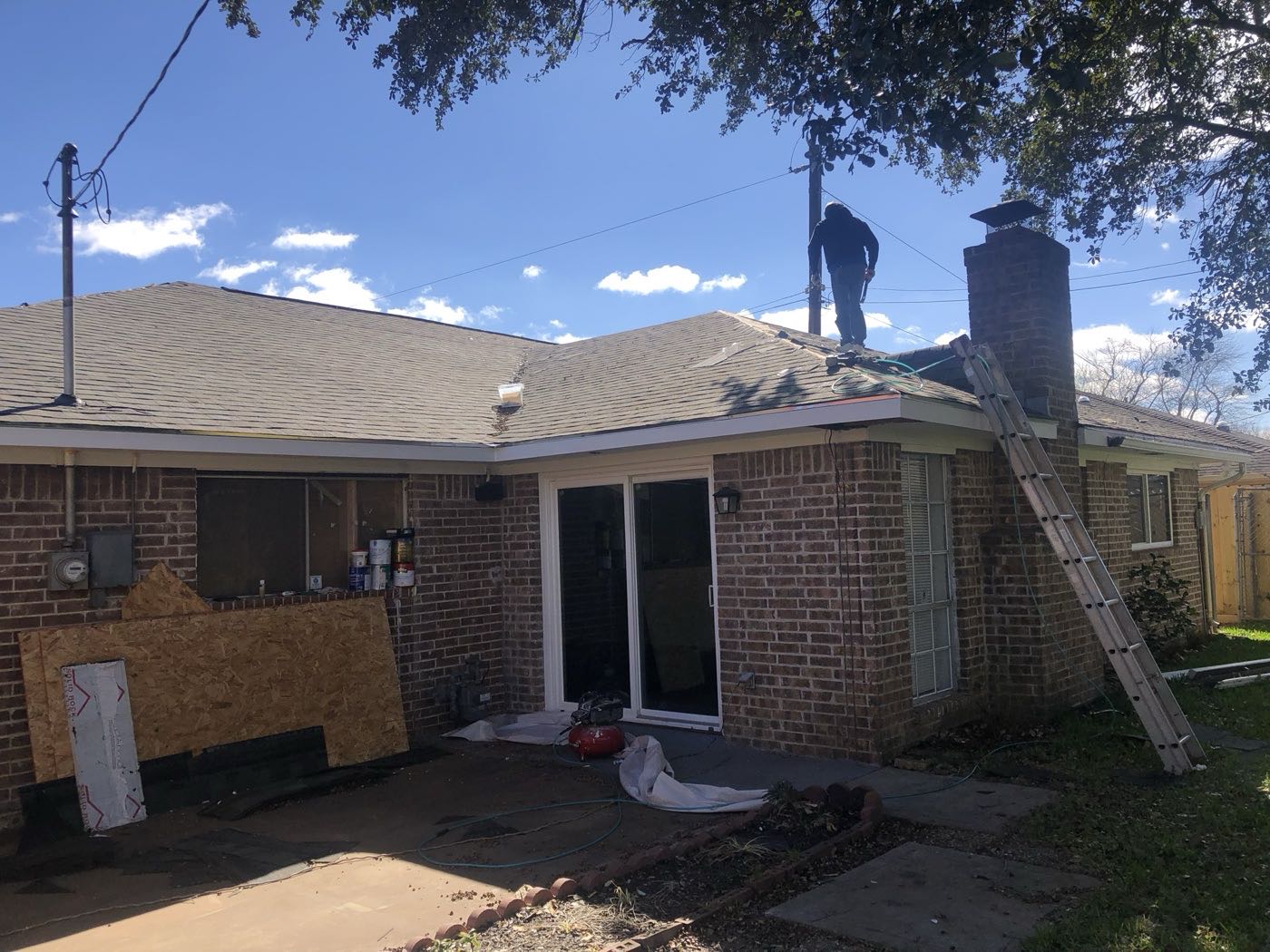
Think Your Roof Took a Hit? Find Out for Sure — Free.
Call or text (281) 686-9227, or take two minutes on our quote form. Free inspection, honest verdict, and a real answer. See the proof first — browse our completed Houston projects.